 58c31ea391
- Ajout de tobimori/kirby-seo via Composer
- snippet('seo/head') dans header.php (remplace les meta manuels)
- snippet('seo/schemas') dans footer.php pour JSON-LD
- Onglet SEO ajouté dans site.yml et tous les blueprints de pages
- Configuration SEO dans config.php (sitemap, robots, canonicalBase TODO)

Co-Authored-By: Claude Sonnet 4.6 <noreply@anthropic.com>
1.6 KiB
| title | intro |
|---|---|
| UTM Share | Share links with tracking parameters for your marketing campaigns |
When you share a link to your site in a newsletter, a social media post, or an ad, you want to know which links actually bring in traffic. UTM parameters are tags you add to a URL so analytics tools like Google Analytics can tell you exactly where a visitor came from.
A URL with UTM parameters looks like this:
https://example.com/blog/my-post?utm_source=newsletter&utm_medium=email&utm_campaign=spring-sale
Kirby SEO adds a UTM Share button to your page views. Click it to open a dialog where you can fill in the parameters and copy the resulting URL.
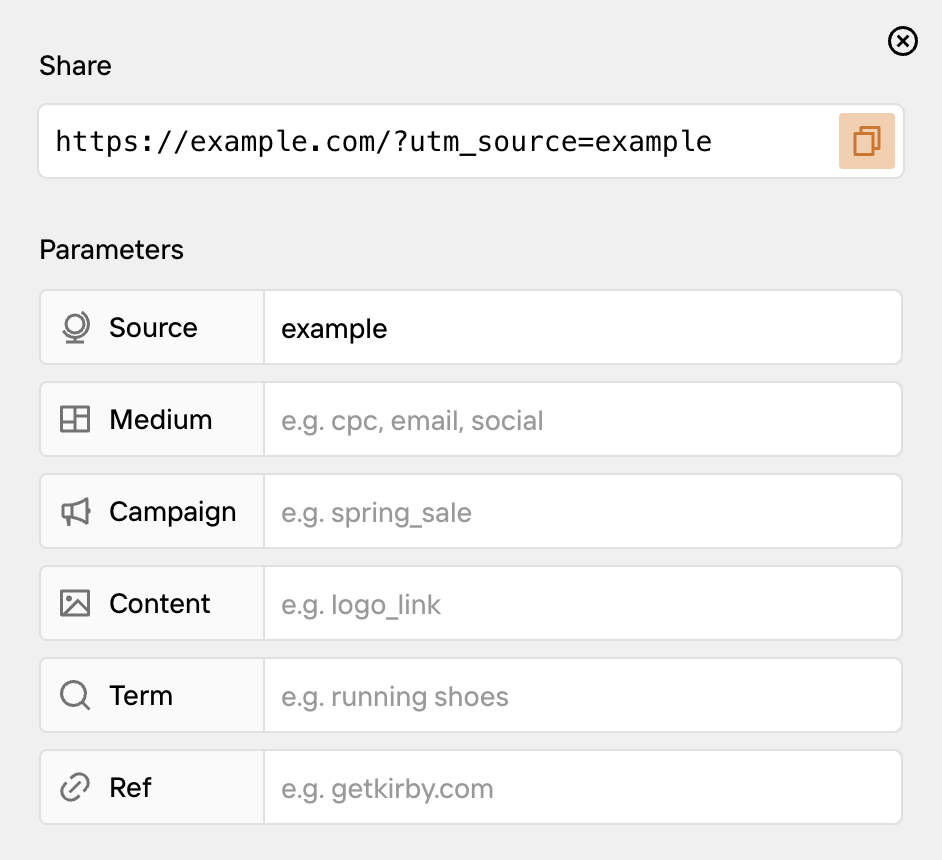
The dialog has five standard UTM parameters:
utm_source: where the traffic comes from (e.g.google,newsletter)utm_medium: the type of channel (e.g.cpc,email,social)utm_campaign: the name of the campaign (e.g.spring_sale)utm_content: to tell apart different links in the same campaign (e.g.logo_link)utm_term: the keyword, for paid search ads (e.g.running shoes)
You don't need all five. Most of the time, utm_source, utm_medium, and utm_campaign are enough.
There's also a ref field. This is not part of the UTM standard, but many analytics tools (like Plausible and Pirsch) use it as a lightweight way to track the referring site.
To add the button to your page blueprints:
# site/blueprints/pages/default.yml
buttons:
  - open
  - preview
  - "-"
  - settings
  - languages
  - status
  - utm-share