 58c31ea391
- Ajout de tobimori/kirby-seo via Composer
- snippet('seo/head') dans header.php (remplace les meta manuels)
- snippet('seo/schemas') dans footer.php pour JSON-LD
- Onglet SEO ajouté dans site.yml et tous les blueprints de pages
- Configuration SEO dans config.php (sitemap, robots, canonicalBase TODO)

Co-Authored-By: Claude Sonnet 4.6 <noreply@anthropic.com>
4.6 KiB
| title | intro |
|---|---|
| Robots & Indexing | How your pages appear (or don't) in search results |
Search engines and AI providers use programs called crawlers to discover and index pages on the web. You can tell these crawlers which pages they're allowed to index and which ones they should skip. These are not hard blocks: crawlers don't have to follow them. But all major search engines do respect them.
Kirby SEO does this in two ways: a global robots.txt file and per-page <meta name="robots"> tags. Both are generated automatically. Most of the indexing control happens through meta tags, while robots.txt acts as a global safety net.
robots.txt
Kirby SEO generates a robots.txt automatically. You don't need to create or maintain it yourself. Visit example.com/robots.txt to see yours.
By default, the output looks like this:
User-agent: *
Allow: /
Disallow: /panel

Sitemap: https://example.com/sitemap.xml
User-agent: *applies the rules to all crawlers.Allow: /permits crawling the entire site.Disallow: /panelblocks the Kirby Panel from being crawled.Sitemap:points crawlers to your sitemap (only shown when the sitemap feature is active).
The robots.txt does not list individual pages. It only sets broad rules. To control indexing for a specific page, you need meta tags (see below).
Debug mode
When Kirby's debug mode is on, the robots.txt blocks all crawlers:
User-agent: *
Disallow: /
This way your development or staging site doesn't end up in search results.
If you need to customize the robots.txt, see Customizing robots.txt.
Robots meta tags
The <meta name="robots"> tag tells search engines what to do with a specific page: whether to index it, follow its links, and more.
Kirby SEO adds this tag to every page automatically.
Default behavior
The plugin follows page status in Kirby:
- Listed pages are visible to search engines
- Unlisted pages are hidden from search engines
- Draft pages are not publicly accessible
In debug mode, all pages are hidden from search engines regardless of their status.
Overriding robots settings
Robots meta tags follow the same Meta Cascade as all other fields. The defaults above kick in when nothing else is set, so you can override them:
- Set a page's robots fields in its Metadata & SEO tab to override just that page.
- Set the robots fields on the Site to override all pages at once.
One thing to watch out for: if you hard-set a value at the site level (e.g. setting "Index" to "No" instead of leaving it on "Default"), every page without its own override will follow that setting through the cascade. Leave fields on "Default" if you want the plugin to decide based on page status.
Robots indicator in the Panel
Kirby SEO has a page view button that shows the current robots status at a glance. You need to add it to your page blueprints manually:
# site/blueprints/pages/default.yml
buttons:
  - open
  - preview
  - "-"
  - settings
  - languages
  - status
  - robots
The indicator has three states:
- Green: the page is visible to search engines
- Yellow: the page is indexed, but with some restrictions
- Red: the page is hidden from search engines
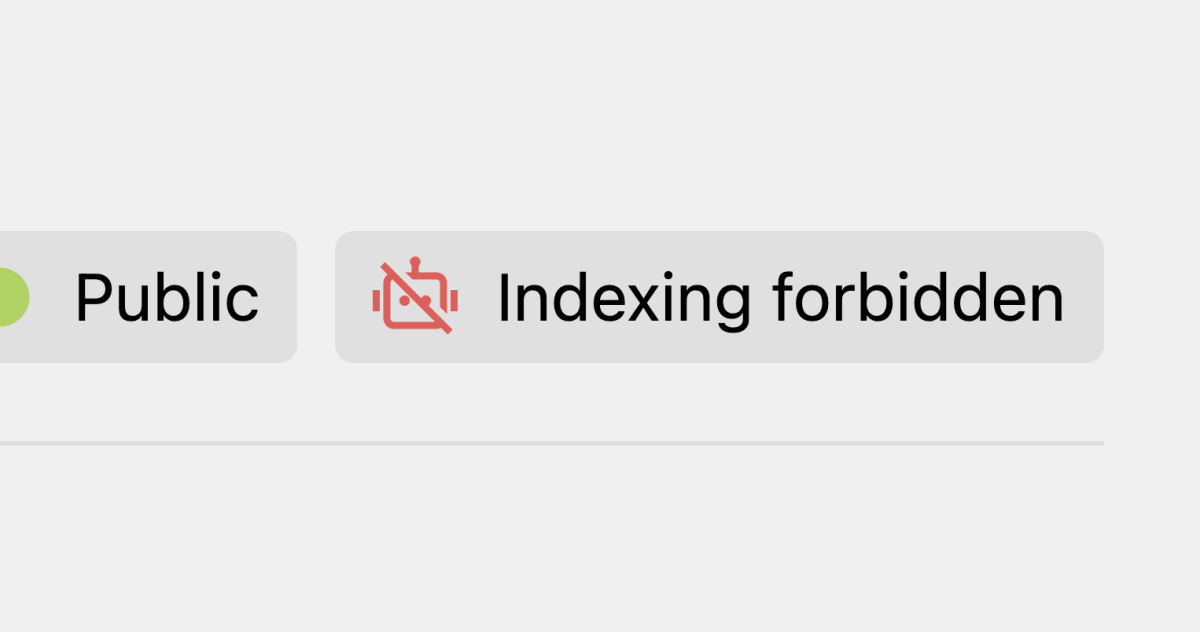
Clicking it takes you straight to the SEO tab, so you can quickly spot which pages are excluded from search engines.
Disabling per-page robots fields
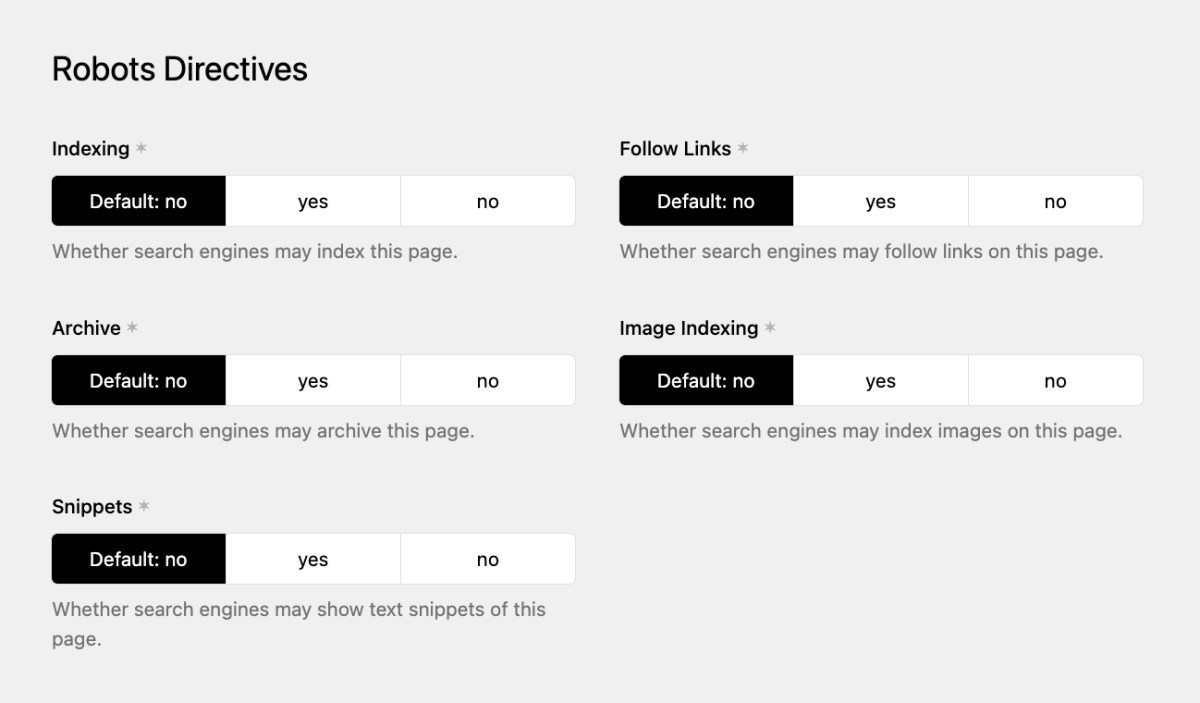
Our suggestion: hide the per-page robots fields unless you actually need them. The defaults are good enough for the vast majority of sites, and the individual settings tend to confuse editors more than they help. You can disable them entirely:
// site/config/config.php
return [
  'tobimori.seo' => [
    'robots' => [
      'pageSettings' => false,
    ],
  ],
];
This hides the robots fields on both page and site level. The defaults (based on page status and debug mode) still apply.
For more ways to customize robots behavior, see Customizing robots.txt.
Tags suppressed by noindex
When a page has noindex, Kirby SEO also removes some related tags that don't make sense on a page hidden from search engines:
<link rel="canonical">is not rendered<meta property="og:url">is not rendered<link rel="alternate" hreflang="...">tags are not rendered
Other tags like <title>, <meta name="description"> and Open Graph tags are still rendered.